And how to build yours strategically.
If you’re building a coaching or creative business, your brand identity is one of the most important foundations you’ll ever create.
Not because it needs to be perfect.
But because it shapes how people perceive your business before you ever speak to them.

A strong brand identity builds trust, clarity, and recognition — all things that help you attract aligned clients without constantly pushing or over-explaining your offer.
At its core, brand identity design is about shaping perception with intention. It’s how your audience experiences your business through visuals, messaging, and emotion.
As Scott Cook once said:
“A brand is no longer what we tell the consumer it is — it is what consumers tell each other it is.”
And that’s the key.
Your brand already exists in people’s minds. The question is whether you’re shaping it on purpose.
Let’s break down the three foundational elements every strong brand identity needs.
“Before you start designing your website, it’s worth making sure your branding reflects who you are and the people you want to serve. If you’re not sure where to begin, take my Discover Your Signature Brand Style quiz.”
1. Brand Name & Tagline
In choosing a name for your brand, be careful not to try and be too witty or clever and confuse your potential customers as to what your brand is about.
Unless you already have a large following, this is usually a mistake.
Brand Name
Choose a name that speaks to your ideal clients exactly what you want them to know.
Ideally, your brand name should be easy to pronounce, memorable and speak directly to your target audience.
And in branding for coaches and small business owners, clarity almost always outperforms creativity.
A strong brand name should immediately give people a sense of:
- what you do
- who you help
- or the feeling your brand creates
If people have to “figure it out,” you’ve already lost momentum.
Why this matters for your business
Your brand name plays a direct role in:
- memorability
- searchability
- perceived professionalism
- trust at first glance
A confusing name can create hesitation. A clear name creates confidence.
Brand Tagline
What makes a great tagline?
How do we define our message in one short sentence, or even just a couple of words?
This is where the benefits or our brand promise come into play.
Demonstrate the value that you bring in just two or three words for a memorable tagline.
Here is a couple of famous examples…
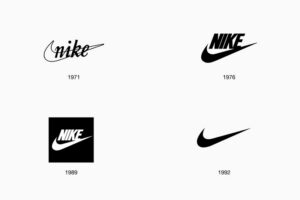
Nike’s memorable slogan “Just Do It” is recognizable throughout all of their branding as is their icon which is simple yet stylish.
I love this slogan ‘Think Different’ as I’m sure it resonates with thousands of entrepreneurs around the world.
Apple has a reputation for innovative thinking and a high-ticket status.
A tagline is where your brand message becomes distilled into something simple and memorable.
It should communicate:
- transformation
- value
- or emotional outcome
Not just what you do — but what changes for your client.
Example mindset shift:
Instead of describing services, describe outcomes.
That’s what makes taglines powerful in brand identity design.
Brand Messaging
If visuals are what people see, messaging is what they feel and understand.
This is where many brands quietly fall apart — not because they don’t look good, but because they don’t communicate clearly.
Strong brand messaging answers three questions instantly:
- What do you do?
- Who is it for?
- Why does it matter?
Brand Story
Your brand story is one of the greatest ways to differentiate yourself from other brands. Stories are much more memorable especially if you can create emotional connections with your ideal clients.
People don’t just buy services — they buy trust.
And trust is built through story.
Your story might include:
- what led you into your business
- the transformation you believe in
- the problem you felt called to solve
- the values behind your work
This is where your brand becomes human.
Brand Message
Your brand message is a concise statement that communicates your core value proposition, or promise, or key benefits of your brand.
It conveys the very reason your brand exists in just one or two sentences.
For instance, it should tell your potential customers exactly what you do, who you do it for, and why you created your business, and how you do it differently than your competitors.
How can these elements of your business be summed up in just one or two sentences?
Your brand message should be simple enough to understand in seconds.
For example:
I help female coaches build strategic, faith-led brands and websites that attract aligned clients with confidence.
This works because it clearly communicates:
- who it’s for
- what you do
- and the transformation
Clear messaging removes friction — and friction is what stops people from enquiring.
Brand Visuals
This is the most visible part of brand identity design — but it should never be the starting point.
Strong visuals come after clarity and strategy.
Logo Suite
One of the first things that entrepreneurs seek when building their brand is a logo.
I’m sure you would have read many times that a brand is more than just a logo. This is very true.
And depending on what sort of business you have, the types of logos you may require will vary.
When you consider the absolute plethora of types of boxes or packaging that exist, the need for various sizes and shapes of logos is obvious.
A professional brand identity usually includes multiple logo variations so your brand can stay consistent across platforms.
This may include:
- primary logo
- secondary logo
- submark
- icon or favicon
This flexibility allows your brand to feel cohesive everywhere it shows up — from websites to Instagram to templates.
Colour Palette
The next thing that can make your business instantly recognizable is your colour palette.
It is generally best not to choose too many colours for your brand as it can look cluttered and unprofessional.
Choose one or two main colours and one that will help your visuals to ‘pop’ is always a good rule of thumb.
Always remember that every colour evokes a different emotion in the viewers, so be sure to consider how you want you customers to feel when they come in contact with your brand.
If you would like to know more about this, then grab my Free ‘Colour Your Brand’ Guide, if you haven’t already. You’ll be sure to find something that inspires you!
Colour psychology plays a powerful role in branding for coaches and service providers.
Your colours influence:
- trust
- emotion
- personality perception
- brand recognition
A strong palette is usually:
- 1–2 primary colours
- 1 accent colour
- neutral supporting tones
Consistency matters more than complexity.
Typography
The fonts you choose also have a profound effect on your audience.
Depending on the mood or style of your brand, they can be designed to attract the type of customer you are looking for.
When displayed using the correct hierarchy, they can give a real sense of professionalism to your brand.
There are many beautiful free and paid typefaces and fonts available such as Adobe, Freepik and CreativeMarket to name just a few.
Typography communicates tone instantly — even before someone reads your words.
Fonts can feel:
- elegant
- modern
- playful
- luxurious
- minimal
When used intentionally, typography elevates your brand from “DIY” to professional without saying a word.
Imagery
Your brand imagery includes photos and videos that are designed in a way to convey your brand’s personality.
Your visuals are a powerful way to communicate your brand story.
When used consistently throughout your website and marketing materials, they can help to attract your ideal audience.
Your imagery sets the emotional tone of your brand.
Whether you use:
- brand photography
- stock imagery
- or curated graphics
Consistency is what builds recognition.
Graphics & Illustrations
Some of the best ways to enhance your brand visuals is to add some design graphics or original illustrations.
These can include icons, illustrations, patterns, and textures and shapes and should contain your brand colours.
Of course, these can also be part of your brand logo.
Once you have all these elements in place you will have a great foundation to start you on your brand journey.
Of course, you will make more changes along the way as your brand will tend to evolve as you evolve and learn new things and develop different tastes in your designs.
So step out and enjoy your brand journey!
Why Brand Identity Design Matters for Small Business Growth
A strong brand identity doesn’t just make your business look good — it makes your marketing easier.
When your brand is clear:
- you attract aligned clients faster
- your content becomes easier to create
- your offers become easier to sell
- your website converts more effectively
Branding is not decoration.
It’s strategy.
If you are looking for some help with your brand or website design, then feel free to Book a Free Call with me and let’s chat!
READ & LEAVE A COMMENT
SHARE